
Have you seen your organic traffic vanish without a Google algorithm update?
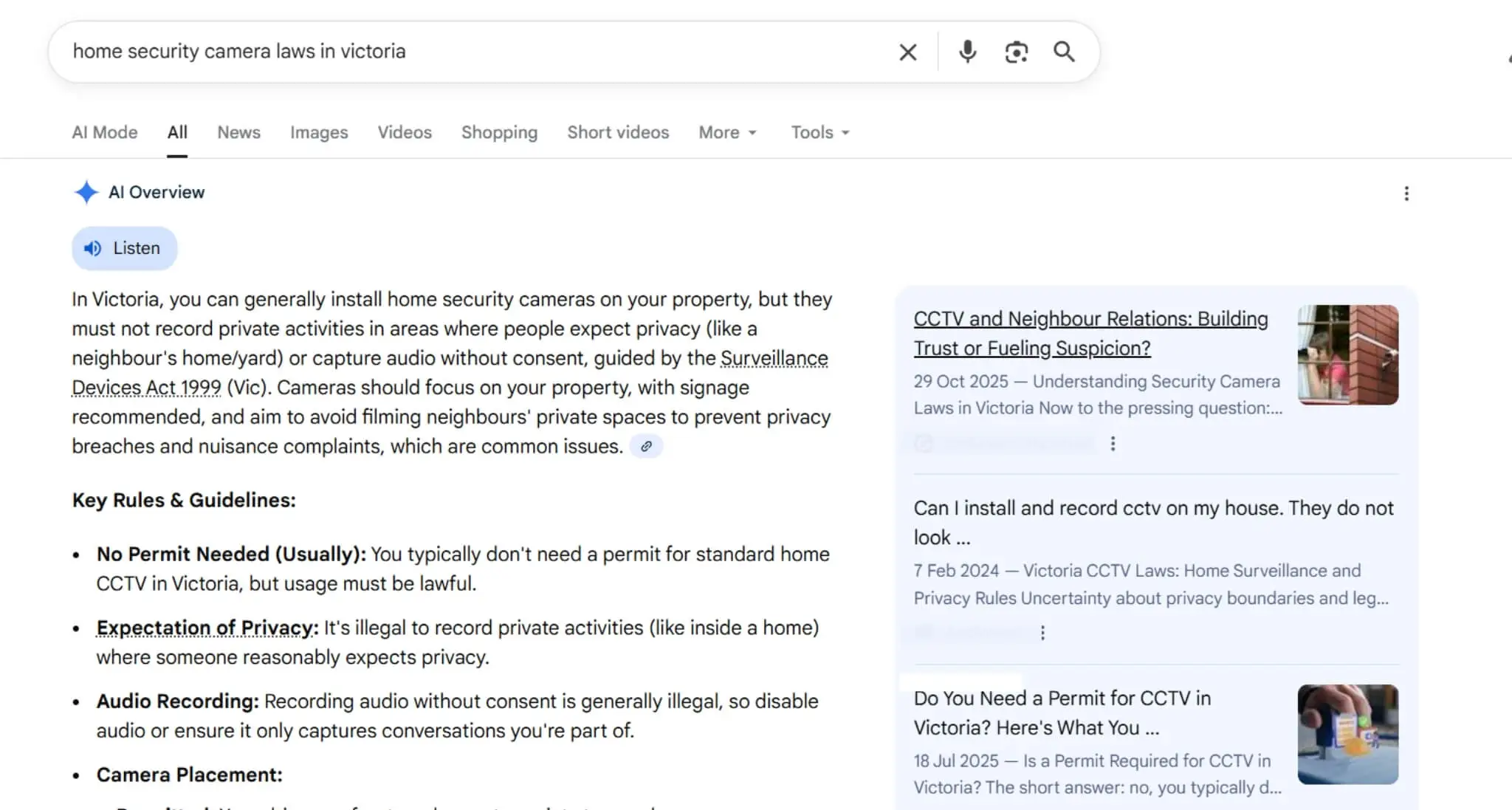
Well, you’re not imagining things because the rules of SEO have fundamentally changed. We’ve moved from an era of ten blue links to one where a single AI-generated answer can satisfy a user’s entire query, cutting out your website entirely.
According to a study,
- News giants like Forbes and HuffPost have lost up to 40% of their traffic since Google introduced AI Overviews (source: nypost)
- Gartner predicts a 25% drop in traditional search volume by 2026, due to conversational AI replacing link-clicking behaviour (source:searchengineland)
This isn’t hypothetical anymore because it is happening now.
Your site isn’t just fighting for a spot on Google. It is competing to be understood, trusted, and cited by large language models (LLMs) that generate answers directly. This shift is exactly why AI SEO is becoming the new standard for visibility in 2025.
This guide will show you exactly how to optimise for AI-driven search with practical steps you can start using today.

A Strategic Overview of the AI Visibility Shift
The old SEO revolved around keywords, backlinks, and climbing up the SERP ladder. The new paradigm is built on three pillars:
- Technical clarity – Your site must be machine-readable and semantically precise.
- Content authority– You need structured, comprehensive, fact-based writing.
- Data structure – Information must be packaged in ways AI can parse and cite.
Basically, your site needs to be so well organised and trustworthy that an AI model cannot help but use it as a primary source.
And that requires technical rigour, audience-centric content, multimodal assets, and a smarter way to measure visibility.
7 Smart Ways to Rank Higher in AI Search for 2025
If you want your website to stay visible in an AI-first world, these 7 steps will show you exactly how to rank higher in 2025.
Step 1: Nail Technical SEO First
Before you think about AI citations, fix your foundation. This is because AI crawlers behave like Google bots. If they can’t interpret your content, you’re invisible.
Checklist for AI-ready technical SEO:
#1 Make sure bots can reach your site
- Type your domain followed by /robots.txt to see if AI bots are blocked.
- Look for “User-agent” lines. If GPTBot, ClaudeBot, PerplexityBot, or Google-Extended are disallowed, remove them.
- Set up the Bing webmaster tool and submit your sitemap. Bing rankings often translate directly to ChatGPT and other LLM results, because Microsoft’s Bing powers ChatGPT in many ways. Ranking high in Bing can give you a huge head start.
Also read: Why Google isn’t indexing your site: Common issues and solutions
#2 Structure your content clearly
Headings are not just about design. They show both readers and crawlers how information is organised. Your main title should be an H1. Use H2s for main sections and H3s for details inside those sections. For example:
H1: Best Coffee Shops in Melbourne
- H2: Coffee in the CBD
– H3: Degraves Espresso Bar
– H3: Brother Baba Budan
This structure is easy to follow and easy for crawlers to interpret.
#3 Add schema markup
Schema is code that explains what your content means. You don’t need to write it manually.
If your site runs on WordPress, plugins like Yoast SEO, Rank Math, or Schema Pro can add it for you.
Use:
- FAQ schema when you publish questions and answers
- HowTo schema for step-by-step guides
- DateModified schema to show when a page was last updated.
You can test if the schema is working or not with Google’s Rich Results Test.
#4 Check who is crawling your site
Most hosting providers or services like Cloudflare let you see traffic logs. Look for names such as GPTBot, ClaudeBot, PerplexityBot, or Google-Extended.
If you find them, it means AI crawlers are reaching your pages. If they return often, your content is being considered for training or citation.

#5 Test your site speed
Go to PageSpeed Insights or GTmetrix and run a test. If the first response takes longer than three seconds, fix it.
The simplest fixes are switching to faster hosting, compressing large images, and enabling caching with a plugin like LiteSpeed or WP Rocket.
AI prefers fast and stable sites because slow pages are seen as less reliable.
#6 Keep your content fresh
Update important pages regularly, especially in fast-changing fields like finance, real estate, or law.
Each time you edit, make sure the “last modified” date is visible in your code. To check, right-click on your page, select “View Page Source,” and search for “dateModified.”
You need to think of technical SEO as the foundation of your house. Without it, the rest of your content has nowhere to stand.
Step 2: Write for Query Fan Out
This is where AI-first optimisation truly starts.
When a user asks “best coffee in Melbourne”, AI doesn’t stop there. It expands the query into sub-questions like:
- Best cafes near Federation Square
- Which Melbourne coffee shops roast their own beans
- Average price of a flat white in 2025
- Coffee culture trends in Melbourne
If your content only lists five cafes, you’re invisible. But if your article covers history, pricing, culture, trends, and FAQs, AI sees your page as a comprehensive resource.
Therefore, you need to treat every search as a seed that blooms into multiple branches.
Here’s how you can apply query fan-out in practice:
- Start with your primary keyword or topic.
- Use tools like People Also Ask, Reddit, Quora, and forums to gather the most common follow-up questions.
- Use autocomplete in ChatGPT or other LLMs in incognito mode to see what people are searching for.
- Answer them in a structured format such as in short paragraphs, tables, and bullet points.
- Add supporting elements like FAQs, statistics, and case examples to signal authority.
Therefore, instead of writing ten separate short posts, you build one comprehensive resource that answers the whole search journey.
This makes your page far more likely to be the one an AI cites in its generated response.
Step 3: Structure Content for AI and Humans
Clarity isn’t just essential for readers but also for AI.
Here’s what works best:
#1 Semantic chunking
Divide your content into short, descriptive sections with clear headings.
For example, in a blog about Melbourne’s coffee culture, you might use one section for “Coffee in the CBD” and sub-sections for “Best Cafés near Federation Square” or “Average Price of a Flat White.”
This hierarchy helps both human readers and AI crawlers understand how ideas connect.
#2 Use semantic triples
AI learns through simple fact-based relationships known as subject–predicate–object triples.
Instead of writing, “Melbourne is famous for coffee,” be precise: “Melbourne has over 2,000 registered cafés as of 2025 (Source: ABS).”
This clarity is what feeds into knowledge graphs and allows your content to become the backbone of AEO answers.
#3 Prioritise tables, charts, and lists
Structured data formats are far more citable than prose.
For a real estate guide, a table comparing median house prices in Kew versus Fitzroy communicates information in a way an AI can lift directly. Similarly, lists of pros and cons, step-by-step guides, or bullet-point breakdowns are easier for AI to parse than dense paragraphs.

#4 Present balanced, factual content
AI favours sources that show objectivity.
If you are writing about Shopify Plus pricing, don’t just highlight the benefits. Include drawbacks, alternatives, and any limitations. This balance builds trust with readers and positions your site as an authoritative, unbiased source.
#5 Support claims with credible sources
Every fact you include should be backed up by reliable references such as government bodies, reputable research, or industry leaders.
For example, if you claim Melbourne has the fastest-growing property prices in Victoria, cite data from the Real Estate Institute of Victoria (REIV). The more verifiable your content is, the more likely it is to be selected by an AI.
Step 4: Invest in Multimodal Content
Here’s the big shift nobody is talking about.
AI isn’t just reading your blog. It pulls from video transcripts, PDFs, podcasts, CSV templates, and references across multiple LLMs, including ChatGPT, Grok, Perplexity, and Claude.
#1 Videos with transcripts
Create short explainers, tutorials, or case studies and publish them on YouTube.
Always include accurate captions and full transcripts as many AI systems crawl transcripts directly to extract answers.
#2 PDFs/Downloads:
AI heavily indexes structured content like PDFs, templates, and e-books. A law firm could publish a guide on “Australian Intellectual Property Law for Startups,” while an accounting practice might release a checklist for “Tax Deadlines in Victoria.”
These resources are seen as authoritative, long-form references that AI can cite.
#3 Podcasts & Webinars:
Podcasts are no longer just for human listeners. By uploading transcripts and detailed show notes, you give AI systems text-based material they can analyse.
A financial advisor, for example, could record a webinar on superannuation changes, then share the transcript and a bullet-point summary on their website for maximum visibility.
#4 Image optimisation
Every image should have descriptive alt text that explains what’s being shown, not just “photo1.jpg”. Alt text helps AI parse and index your visual content.
If you publish a chart comparing property prices across Melbourne suburbs, detailed alt text ensures the data is understood and retrievable.
Step 5: Build and Signal Trust with EEAT
Authority is no longer just a choice. AI is trained to reward trustworthy sources.
Here’s how you can prove that you’re credible:
#1 Showcase author credentials clearly
Every article should include a detailed author bio with verified expertise. And whatever you do, avoid publishing AI-generated content. LLMs prioritise original, verifiable information. Content copied or generated by AI may reduce your chances of being cited or trusted
#2 Use transparent, verifiable sourcing
Citations need to come from credible, traceable sources. A property article claiming Melbourne’s auction clearance rate is rising should link to the Real Estate Institute of Victoria (REIV), not a generic blog.
The more transparent your sources, the stronger your credibility signal.
#3 Build authority with third-party validation
Authority cannot be manufactured; it is earned and recognised externally. Highlight any industry certifications, awards, or media features on your site.
For example, if your business was featured in the AFR or awarded a Chamber of Commerce recognition, showcase it with context and proof. These external signals are factored in by AI systems when deciding which sources to trust.
#4 Strengthen your digital footprint
EEAT is not confined to your website. AI models check signals across the wider web. This means your author and brand presence on LinkedIn, industry forums, podcasts, or conferences matter. This is closely tied to Generative engine optimisation (GEO), where strengthening your entity presence across the web reinforces both human and AI trust signals.
#5 Maintain transparency at every touchpoint

Trustworthiness also comes from clarity in your business practices. Publish clear editorial guidelines, display contact information, and provide disclaimers where necessary.
AI models are trained to reward transparency and penalise hidden motives.
Always remember that EEAT isn’t just a Google metric anymore. It’s the credibility filter for AI models.
Step 6: Measure AI Optimisation
You can’t improve what you don’t track.
Here’s how to start:
#1 Track AI citations directly
Emerging tools such as Nozzle and Authoritas are beginning to report when your brand or content is referenced inside AI-generated answers.
These insights are the closest thing we have to a “search console for AI” and will become a core metric in the next few years.
#2 Analyse your server logs for crawler activity
Your log files show every bot that visits your site. Check regularly for GPTBot, ClaudeBot, PerplexityBot, and Google-Extended.
Frequent crawls suggest your content is being ingested into their training or retrieval pipelines. If these bots are absent, your site may not even be on the radar.
#3 Identify zero-click queries
Google Search Console still provides useful clues. Queries with high impressions but low clicks often indicate that an AI Overview is answering the question directly.
Instead of chasing the lost clicks, reframe your goal i.e., become the underlying source that powers those answers.
#4 Monitor brand mentions beyond backlinks
AI models value reputation signals, even when they are unlinked. Use monitoring tools to track where your brand appears in forums, Reddit discussions, LinkedIn posts, or industry newsletters.
Each mention is a validation point that strengthens your authority in the wider web graph AI models draw from.
Step 7: Distribute Beyond Your Website
AI does not only learn from your website. It scans the wider web, looking for credible signals of expertise and authority. To maximise visibility, your content strategy must move beyond a single domain.
You need to think of your website as the hub and every other platform as a spoke feeding authority back to it.
This is how you can expand your presence across various platforms:

#1 LinkedIn for thought leadership
Publish key insights, snippets, or mini-guides drawn from your main content. Well-structured LinkedIn posts, especially with references to your website, create authoritative signals that AI models can detect.
#2 YouTube for video explainers
Upload tutorials, case studies, or walkthroughs with full transcripts. Videos act as additional data sources AI can reference for voice search and visual content queries.
#3 Forums, Reddit, and Q&A platforms
Answer relevant questions on niche forums, Reddit threads, and Quora.
Even unlinked mentions of your brand in contextually relevant discussions help AI understand your expertise and reinforce credibility.
#4 Other content hubs
Podcasts, SlideShare presentations, Medium articles, and industry newsletters all serve as additional spokes.
Each appearance contributes to your digital footprint and the web of signals AI uses to determine trustworthiness.
Just think of it like planting seeds. The more platforms you show up on, the more likely AI is to recognise you as authoritative.
Traditional SEO vs AI SEO: A Quick Comparison
| Aspect | Traditional SEO | AI SEO |
| Primary goal | Rank on Google’s SERPs (10 blue links) | Get cited, surfaced, and trusted in AI-generated answers across ChatGPT, Perplexity, Claude, Gemini, etc. |
| Crawlers | Focus on Googlebot & Bingbot | Includes LLM crawlers like GPTBot, ClaudeBot, PerplexityBot, Google-Extended |
| Content style | Keyword-driven, often page-specific | Comprehensive, query-expansion (covers whole topic clusters & FAQs) |
| Structure | Optimised for humans + search engines (H1, H2, meta tags) | Semantic chunking, tables, lists, and triples (facts AI can lift directly) |
| Authority signals | Backlinks and domain authority | EEAT signals + external mentions, credentials, citations, digital footprint |
| Formats indexed | Mostly webpages & blogs | Multimodal: blogs, PDFs, videos (transcripts), podcasts (show notes), datasets |
| Tracking success | Rankings, clicks, backlinks | AI citations, zero-click impressions, crawler log analysis, unlinked mentions |
| Distribution strategy | Website + backlink outreach | Omnichannel presence: LinkedIn, Reddit, YouTube, podcasts, forums |
| Update cycle | Refresh content periodically for Google | Regular updates with schema + visible dateModified for AI trust |
| End user experience | Human reader clicks and scans SERP | AI summarises your content into direct answers – fewer clicks, higher trust |
Final Thoughts
Search has changed. It’s no longer about ranking on a page but being the source AI turns to.
The formula is simple but powerful:
- Solid technical SEO
- Content that expands into sub-queries
- Structured, factual writing
- Multimodal assets
- Trust signals (EEAT)
- Distribution beyond your site
Businesses that adapt now will stay visible in 2025. And those that don’t will be left wondering why their traffic disappeared.
If you want help making your brand AI-search ready, my team has been testing these strategies with clients across Australia.Reach out, and let’s make sure your business is cited in tomorrow’s AI answers.
Frequently Asked Questions
How is AI search different from Google search?
AI search doesn’t just list websites. It generates answers by pulling from multiple sources and summarising them.
What type of content does AI prefer?
Structured, fact-based, well-sourced content that covers multiple angles of a query. Tables, stats, and FAQs work best.
Do backlinks still matter?
Yes, but AI also values citations from credible publications, community mentions, and distribution on platforms like YouTube.
Should small businesses worry about AI search?
Yes, and they should start planning now. Even if your website isn’t ranking at the top of Google, your content can still be noticed if it’s well-structured, well-sourced, and answers common customer questions. The more useful and authoritative your content, the more likely people will find and trust your brand.


