Website migration case study

Furniture SEO Case Study: Classic Chesterfield – A Full Domain Migration

We moved a site that ranked #1 nationally for 'Chesterfield' to a brand-new domain. It never dropped.

#1‘Chesterfield’
Held through the switchover
#1‘Chesterfield Sofa’
On the new domain
215URLs mapped 1:1
Every legacy URL redirected
50 yrsBrand equity
Carried to the new domain
Summary

Migration summary

Classic Chesterfield is a 50-year-old Melbourne maker of handcrafted Italian leather Chesterfields, selling Australia-wide. In 2025, Optweb Digital rebuilt their website and moved it from chesterfieldfurniturefactory.com.au to classicchesterfield.com.au, a full domain migration carried out while the site held the #1 national ranking for 'Chesterfield'. Every legacy URL was mapped 1:1 to its replacement before launch, with a rollback plan ready if rankings slipped. They didn't: 'Chesterfield' stayed at #1 throughout, and the new domain also ranks #1 for 'Chesterfield Sofa' and #2 for 'Chesterfield Furniture'.
PROJECT DETAILS

Client Profile

DetailInformation
ClientClassic Chesterfield
IndustryFurniture - Handcrafted Leather Chesterfields
LocationMelbourne, servicing Australia-wide
ServiceWebsite Rebuild, Domain Migration & SEO
Migration go-liveJune 2025
New domainclassicchesterfield.com.au
THE BRAND BEHIND THE SEARCH

Business Overview

Classic Chesterfield is one of Australia's most storied luxury furniture brands: a 50-year-old family business built on a single, uncompromising commitment to 100% handcrafted, genuine Italian leather Chesterfields made in Melbourne.

From a humble workshop to an iconic national name, the business earned its reputation the hard way, through generations of craft, quality and customer loyalty. Online, though, the picture was different. The website looked dated, it lived on a domain that didn't carry the brand name, and the platform underneath it wasn't built to grow.

Classic Chesterfield partnered with Optweb Digital with a clear mandate: rebuild the website to match the brand, move it to a new domain, and do it without giving up a single position on Google.

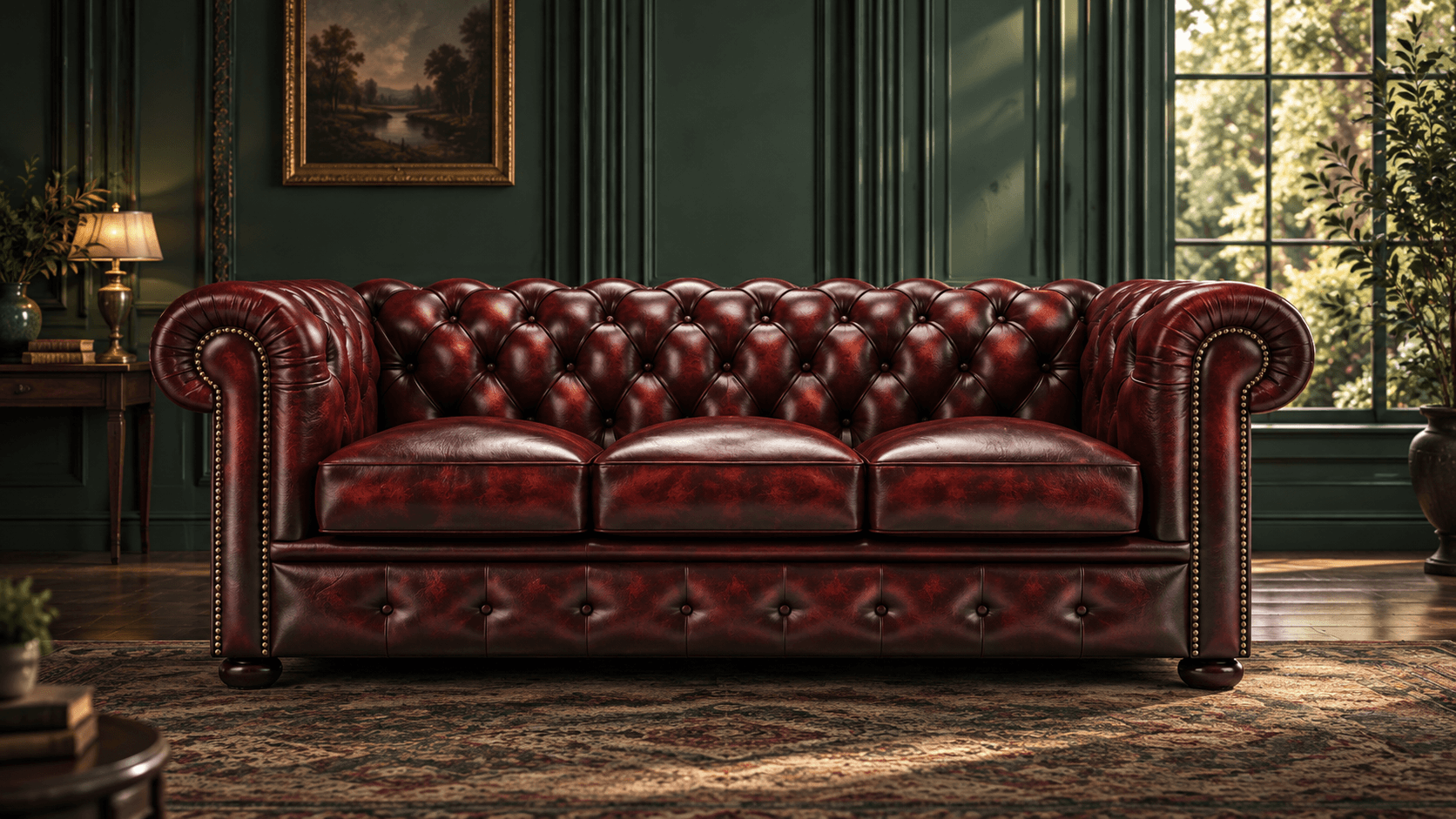
Classic Chesterfield case study visual
THE SEO RISKS

Key Challenges

A domain migration is one of the riskiest projects in SEO. Done badly, years of rankings can disappear overnight. Classic Chesterfield had more to lose than most:

A #1 national ranking at stake

The site already held #1 in Australia for 'Chesterfield', the most valuable term in the category. Any mistake in the move would put it straight at risk.

A domain that didn't match the brand

Customers knew the business as Classic Chesterfield, but the website lived at chesterfieldfurniturefactory.com.au.

Years of accumulated SEO equity

Indexed product and category URLs, plus every backlink earned over the years, pointed at the old domain. All of it had to be carried across intact.

An outdated website

The legacy site didn't reflect the brand's premium identity, so the migration had to happen alongside a full rebuild, multiplying the number of URLs and templates that would change at once.

The migration

The Migration: How We Moved a #1-Ranking Site Without Losing a Position

We moved a site that ranked #1 nationally for 'Chesterfield', and it never dropped.

Most migrations that lose rankings fail for the same reason: someone treats redirects as a launch-day task. We treated the migration as the main project and the redesign as something that had to fit around it.

1

Inventory every URL on the old domain

Before designing a single page, we built a complete list of every URL Google knew about on the legacy site, combining a full site crawl with Google Search Console, Google Analytics 4 and backlink data. That surfaced 215 URLs, including old product pages and pages that only existed because other sites linked to them. Each one was tagged with its rankings, traffic and inbound links, so we knew which pages carried the most weight.

2

Build a 1:1 redirect map

Every old URL was mapped to its closest equivalent on the new domain with a permanent (301) redirect. Nothing was bulk-redirected to the homepage, and every redirect pointed straight to its final destination with no chains.

Legacy page typeWhere it redirectedWhy it matters
HomepageNew homepagePasses the domain's core brand authority directly
Category pages (e.g. Chesterfield Sofas)Matching category on the new siteThese pages held the rankings, so their relevance had to carry over 1:1
Product pagesSame product on the new siteKeeps product-level rankings and backlinks intact
Discontinued productsClosest relevant categoryAvoids 404s and soft-404s that waste link equity
Content and information pagesEquivalent page on the new sitePreserves supporting content that builds topical authority
3

Build the SEO into the new site from day one

The new website was designed around the pages that already ranked, not the other way round. Ranking pages kept their focus keywords, headings and core copy. Metadata, schema markup, canonical tags, internal linking, XML sitemaps and Core Web Vitals were set up on the new domain before launch, so Google saw a stronger version of the same site rather than a stranger.

4

Test everything on staging

Every redirect in the map was tested on staging before go-live. We checked for 404s, redirect chains and loops, broken internal links, incorrect canonicals, and noindex tags left over from development.

5

A controlled go-live

On launch day, the redirects went live alongside the new site. We submitted Google Search Console's Change of Address request, submitted the new XML sitemaps, and verified both domains in Search Console so we could watch the hand-over from both sides.

6

The rollback plan

We never had to use it, but it was ready before launch:

  • The legacy site was kept fully intact and backed up, so it could be restored at any point.
  • Redirects and DNS could be reverted if needed.
  • Clear triggers were agreed in advance: if 'Chesterfield' fell below position 10, or crawl errors spiked, we would pause and roll back rather than wait and hope.
  • Core rankings, crawl errors and 404 logs were monitored daily for 4 weeks after launch.
7

Post-launch monitoring and clean-up

After launch we tracked rankings for core terms daily, watched index coverage move from the old domain to the new one, fixed any stray 404s, and asked the sites behind the most valuable backlinks to update their links to the new domain.

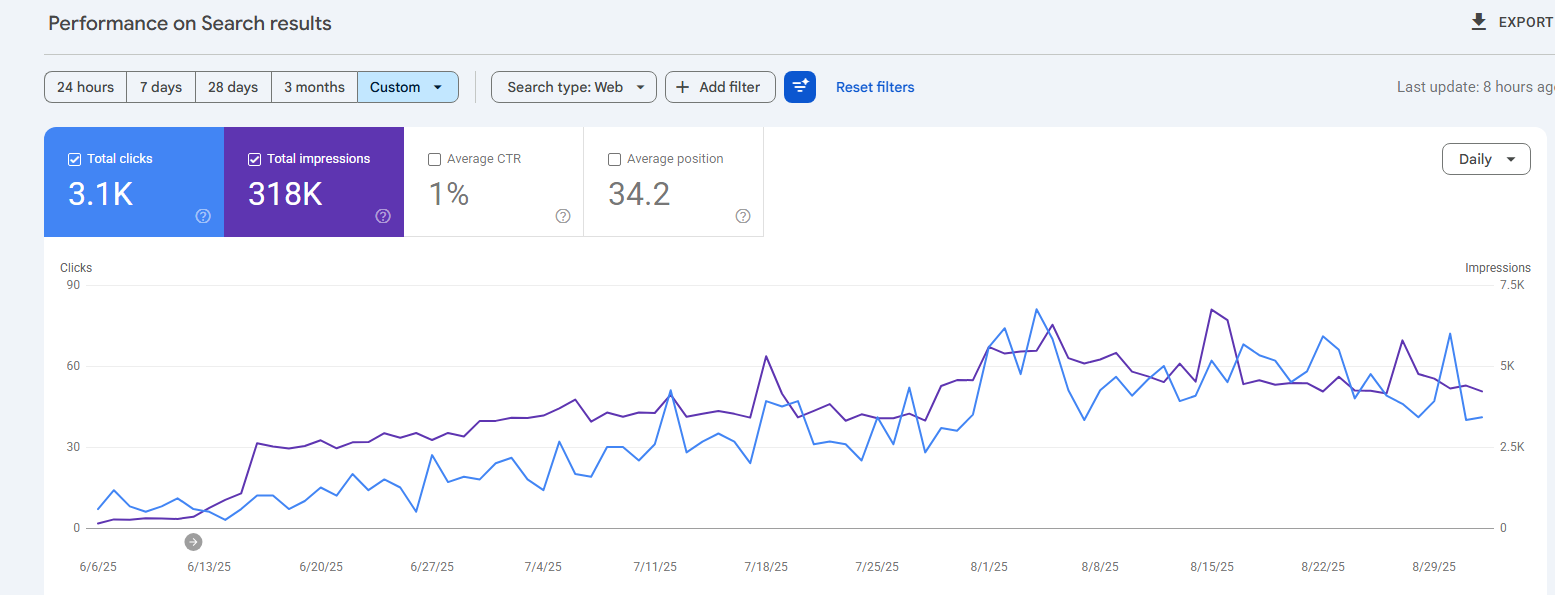
Google Search Console performance analytics after the Classic Chesterfield domain migration
Rankings on the new domain

Core rankings held through the migration

KeywordBefore migrationAfter migration
Chesterfield#1#1
Chesterfield Sofa#2#1
Chesterfield Furniture#3#2
Website transformation

From Outdated To Revenue-ready

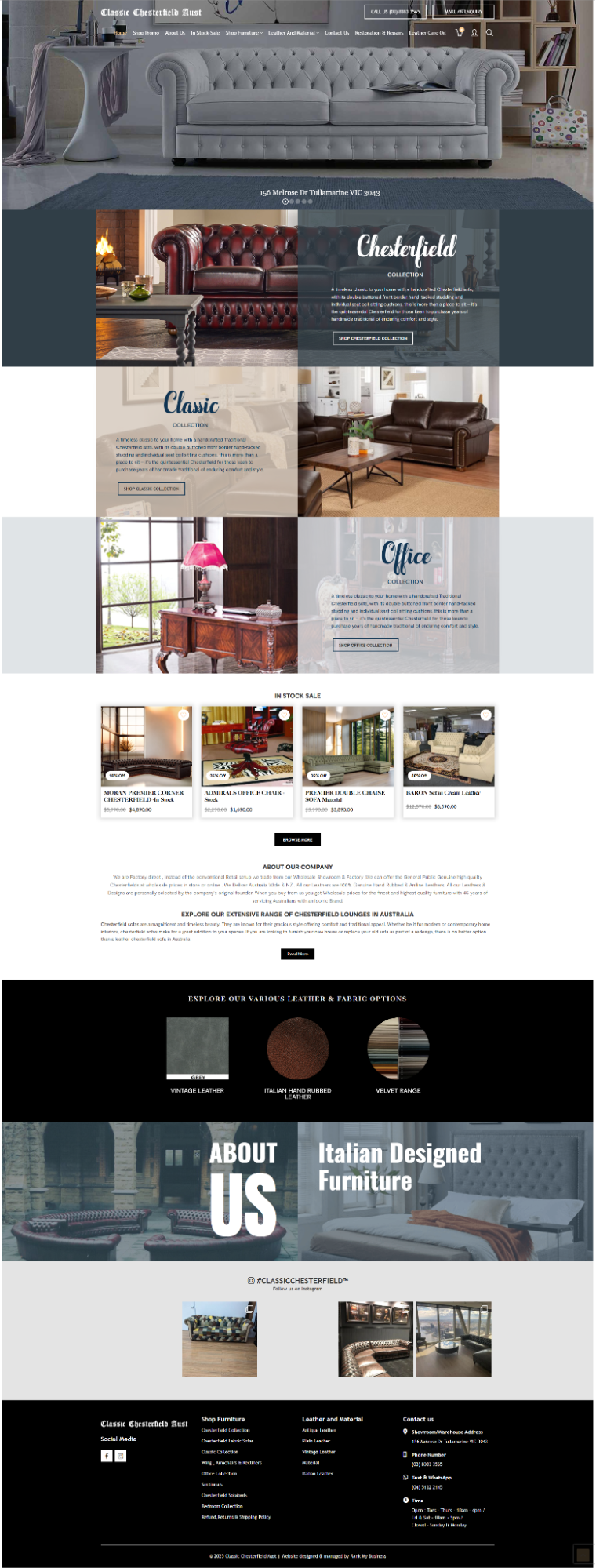
Before: old Classic Chesterfield website on chesterfieldfurniturefactory.com.au
After: rebuilt Classic Chesterfield website on classicchesterfield.com.au
BEFOREAFTER

Drag horizontally to compare. Scroll vertically over the screen to explore the full pages; use the up/down arrow keys when the screen is focused.

What the client says

“Outstanding Service and Results – Highly Recommend Optweb Digital”

We’ve been working with Optweb Digital for the past few months, and the experience has been nothing short of exceptional. As a well-established and widely Recognised brand, we were initially cautious about who to trust with our online presence. However, from the very beginning, Matt and Vish impressed us with their professionalism, attention to detail, and genuine commitment to our success.

They’ve done an incredible job on our new website and SEO strategy, and the results speak for themselves — our website traffic and Enquiries have already doubled in a short period of time.

Optweb Digital has not only delivered top-tier work, but their impeccable service and ongoing support make them a true asset to any business serious about improving its online performance.

Chesterfield highly recommends Optweb Digital to any company looking to elevate their digital presence and drive real, measurable results. Thank you, Matt and Vish, for your outstanding work.

— Chesterfield International

Frequently asked questions

SEO, website redesign and migrations

Can you keep your Google rankings during a website migration?

Yes, but only with a complete URL map and a staged rollout. We migrated Classic Chesterfield to a new domain while it held the #1 national ranking for 'Chesterfield'. Every old URL was mapped 1:1 to its replacement before any change went live, and the position never dropped.

Does a website redesign hurt your SEO?

It can, and often does. A redesign that changes URL structures without redirects loses rankings immediately. We rebuilt Classic Chesterfield's site with the SEO architecture designed in from the start rather than retrofitted, which is why its core rankings held through both a redesign and a change of domain at the same time.

What is a redirect map, and why does it matter?

A redirect map is a list pairing every URL on your old site with its new address. It tells Google exactly where each page has moved, so the rankings and links that page earned follow it. Without one, Google treats moved pages as gone, and whatever they ranked for goes with them.

What should a migration rollback plan include?

A full backup of the old site, a way to revert redirects and DNS quickly, and agreed triggers for when you'd use it, such as a core keyword dropping past a set position. Deciding those triggers before launch stops you second-guessing under pressure.

How long does Google take to settle after a domain migration?

It varies with site size, but small fluctuations over the first few weeks are normal while Google recrawls the old URLs and follows the redirects.

Planning a redesign or migration?

Considering a migration?

We'll run the same pre-migration check we ran for Classic Chesterfield: every URL you'd need to redirect, which pages carry your rankings and links, and where the real risks are. Twenty minutes, no pitch deck.

Book your migration risk check